
Public sector banks have raked in more profits in the three months ended June on the back of a persistent decline in bad loans and the trend may have a positive bearing on their balance sheets in the coming quarters. In the June quarter, Bank of Maharashtra (BoM) and State Bank of India (SBI) were in the lowest quartile as far as Gross Non Performing Assets (NPAs) and net NPAs were concerned, according to an analysis of the quarterly financial numbers published by the public sector lenders. Cumulatively, all the 12 public sector banks reported a profit of about Rs 15,306 crore in the three months ended June, registering an annual growth of 9.2 per cent. However, leading public sector lenders -- SBI and PNB -- posted lower profits in the June quarter.

Mutual funds focused on investing in fixed-income securities witnessed a heavy outflow of Rs 92,248 crore in June on uncertain macro environment, driven by expectations around an increasing rate cycle, higher commodity prices and slowdown in growth. This comes following a net outflow of Rs 32,722 crore in May and an inflow of Rs 54,756 crore in April, data available with Association of Mutual Funds in India (Amfi) showed. Out of the 16 fixed-income or debt fund categories, 14 witnessed net outflows during the month under review.

The OCCRP report alleges that at one point, EIFF and EMRF held free-floating shares ranging from 8 per cent to nearly 14 per cent in the four Adani Group companies.

Why did the company zero in on RBL Bank to understand the business of banking? While the M&M investors heaved a sigh of relief, one gentleman must have been all smiles after this, RBL Bank MD and CEO R Subramaniakumar, notes Tamal Bandyopadhyay.

The government is nudging LIC to tweak its product strategy to maximise profitability in a bid to help the country's largest insurer realise its full growth potential and yield better returns for investors, an official said. Life Insurance Corporation (LIC) has been trading below the issue price of Rs 949 a share ever since it got listed on stock exchanges on May 17. It listed at Rs 872 apiece on NSE. On Tuesday, the scrip settled at Rs 595.50, down 0.72 per cent over the previous close.

Sebi has allowed mutual fund schemes the option of 'side-pocketing' which move will help both fund houses and investors.

The sale is key to meeting the government's disinvestment target of Rs 2.1 trillion in the financial year 2020-21. So far, the disinvestment exercise has fetched the government Rs 34,845 crore during the current financial year.

'From a risk-return perspective, large-cap funds may generate lower-than-historical average returns in 2024, whereas mid-, and small-cap funds hardly have any upside left.'

Regarding the applicability of stamp duty on redemption of mutual fund (MF) units, Sebi said, "Redemption is not liable to duty as it is neither a transfer nor an issue nor a sale." However, switching in mutual fund would attract stamp duty. "The issue of fresh units in the switched scheme would attract stamp duty even though there is no physical consideration paid or transfer of ownership," Sebi said.
Life Insurance Corporation of India (LIC) declared disappointing results in Q1FY24. While it reported a net profit of Rs 9,540 crore in Q1FY24, this was attributable to the transfer of Rs 7,490 crore from non-participating (non-par) products to shareholders' accounts due to the accretion on available solvency margin. In operational terms, annualised premium equivalent (APE) declined and value of new business (VNB) margin was flat. But the medium-term prospects may be better.

If you want to invest in mutual funds, but don't want your investment to dip below market returns, then you must know the difference between 'active' and 'passive' investing.

While analysts assessed One97 Communications (Paytm) Q1FY24 results as in-line with guidance, the market was disappointed and the stock fell by around 5 per cent. Paytm reported a net loss of Rs 360 crore, but revenue grew 39 per cent year-on-year (YoY) to Rs 2,340 crore. It was supported by strong growth in gross merchandising value (GMV), higher disbursements and the addition of subscription devices.

In essence, follow the private-equity approach to personal investing and treat each investment decision as if it is a matter of life-or-death, because it is, suggests Avinash Luthria.

There cannot be value in every stock, whether large cap or otherwise. Thus buying a stock cheap does not always translate into value buying

The bank had a consolidated net profit of Rs 4,714 crore in the corresponding quarter last year.

Life insurers are launching these again. Invest if you are conservative.
HDFC Bank Q4 review: HDFC Bank's January-March quarter (Q4) results, for financial year 2022-23 (FY23), brought no cheer to investors as elevated costs, and merger-related uncertainties continue to dent the sentiment. Moreover, analysts fear that merger-related costs may put pressure on margins and cost to income ratio in the near-term, while the return on equity could moderate owing to low leverage of the parent. Analysts, therefore, opine that the stock's re-rating may be some time away. "While the risk of a de-rating on a standalone basis appears to be quite low given that the business performance is holding up well, we believe a re-rating in the stock would happen as and when more clarity emerges on the smooth transition (merger)," said a report by Sharekhan.

'Just the amount of work which is there just to become more and more successful in banking. For this to happen you need to have leaders who understand technology.'

Net investments in active equity mutual fund (MF) schemes rose to Rs 7,300 crore in December after declining to a 21-month low of Rs 2,260 crore in November, shows the latest data from the Association of Mutual Funds in India (Amfi). The rebound in net inflows was driven by a surge in investments and moderation in redemptions. While the inflows into these schemes rose 5 per cent month-on-month (MoM) in December, the redemptions were 14 per cent lower compared to November.

Pakistan Prime Minister Shehbaz Sharif's wife and former premier Imran Khan's wife have financial assets worth more than their husbands.

The country's largest bank registered a consolidated net profit of Rs 4,448.15 crore in the same quarter last year.

Global investment firm Blackstone-sponsored Nexus Select Trust has filed the draft paper with market regulator Sebi to launch India's first public issue of retail REIT to raise around $500 million (about Rs 4,000 crore), sources said. Nexus Select Trust has a portfolio of 17 operational shopping malls across 14 major cities, covering about 10 million square feet of area valued at around $3 billion. As per the sources, Nexus Select Trust has on Thursday filed the Draft Red Herring Prospectus (DRHP) with the Securities and Exchange Board of India (Sebi) and is looking to hit the capital market with India's first retail REIT (Real Estate Investment Trust) public issue in the first half of the 2023 calendar year.

Reliance Industries chairman Mukesh Ambani has overtaken Adani Group chairman Gautam Adani to become the richest Indian in the world with a net worth of $84.3 billion, according to Forbes Real-time billionaire list for 2023. Ambani overtook Adani after the Reliance Industries chairman's assets went up 0.19 per cent with an increase of wealth by $64 million while Gautam Adani's assets went down by 4.62 per cent with the industrialist's weath pegged at $84.1 billion according to the real time tracker of Forbes of 5 pm EST on Tuesday. Adani who figured among the top three billionaires in the world has dropped in the ranking to number 10 just below Mukesh Ambani.

When selecting investments, pay attention to potential return, risk and how easily you can exit it.

In what is in effect a deposit to be paid into court pending a full trial in the case, Judge David Waksman has set a six-week timeline for Anil to pay $100 million to three Chinese banks as he concluded that he did not accept Ambani's defence that his net worth was nearly zero or that his family would not step in to assist him when "push came to shove".

Under the new guidelines, the top 10 active equity schemes in terms of assets would collectively require investments of around Rs 365 crore -- up from mandated Rs 50 lakh at present -- in their own schemes.


RCom had net debt of about Rs 40,222.6 crore at the end of June 30.

Before you rush to invest in these funds, understand the risks they carry and whether you have the appetite for them, says Sanjay Kumar Singh.
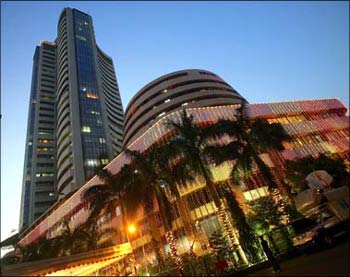
Investors in exchange-traded funds can trade on bourses.

Investors should look at actively managed funds, says Devangshu Datta.
The country's most valuable lender HDFC Bank can perhaps no longer claim to be a favourite of foreign portfolio investors (FPIs). Two data indicators, both somewhat interconnected, point to this - the diminishing premium of HDFC Bank's American depositary receipts (ADRs) compared to local shares, and the ample investment opportunities available to FPIs in the domestic market. The ADR premium has shrunk to below 5 per cent, down from over 30 per cent in March 2021, and even lower than recent levels.
Deal comes within days of Abu Dhabi's TAQA pulling out of agreement.

Retail investors now own a bigger slice of small-cap companies than a couple of years earlier, attributable to their growing conviction in mutual fund (MF) schemes focused on this space. Data from Capitaline shows MFs' average holding in the National Stock Exchange Nifty Smallcap 250 rising to 8.67 per cent, from 7.67 per cent in the past two financial years, with the number of companies with over 20 per cent MF holdings, rising from 15 to 24. At the end of May, the top five small-cap firms with the highest MF holdings were Carborundum Universal, Blue Star, Cyient, Gujarat State Petronet, and Cholamandalam Finance.

The recent run on the US-based Silicon Valley Bank (SVB) and the subsequent seizure of its assets by the regulators may have sparked a global wave of risk aversion, particularly for start-ups. However, the Indian banking sector is unlikely to be a victim of any contagion effects, said analysts. he bank, which played a big role in financing start-ups and technology players, faced stress after incurring huge losses on its holdings of US bonds, following the most-aggressive monetary tightening cycle by the Federal Reserve in around four decades.

Mortgage lender HDFC Ltd on Monday said its board has approved raising funds through non-convertible debentures (NCDs) in tranches aggregating to Rs 57,000 crore. The board has cleared issuance of unsecured, redeemable, non-convertible debentures under a Shelf Placement Memorandum, aggregating Rs 57,000 crore, in various tranches, on a private placement basis, HDFC said in a regulatory filing. This is in accordance with the approval granted by the shareholders of the HDFC at the 45th annual general meeting held on June 30, 2022, it said.

'The market should maintain optimism on the back of range-bound oil prices, a robust fiscal balance sheet, a better-than-expected monsoon, and moderating inflation.'

According to the Central Bureau of Investigation, Gutte is one of the directors of Gangakhed Sugar and Energy Limited.

Mistry's strategy appears to be the opposite of the group's stance in the heady days of 2007
Notwithstanding sharp volatility in March, mutual fund (MF) investors didn't fight shy of investing in riskier small-cap-oriented schemes. Inflows into small-cap funds were not just the highest in absolute terms, they were also the maximum as a proportion of assets under management (AUM) among all market capitalisation (m-cap)-oriented categories. Investors funnelled Rs 2,430 crore down small-cap funds - 1.8 per cent of their AUM of Rs 1.33 trillion.
 © 2026 Rediff.com - Advertise with us - Disclaimer - Privacy Policy - Sitemap - Feedback - About us - Terms of use - Grievances